

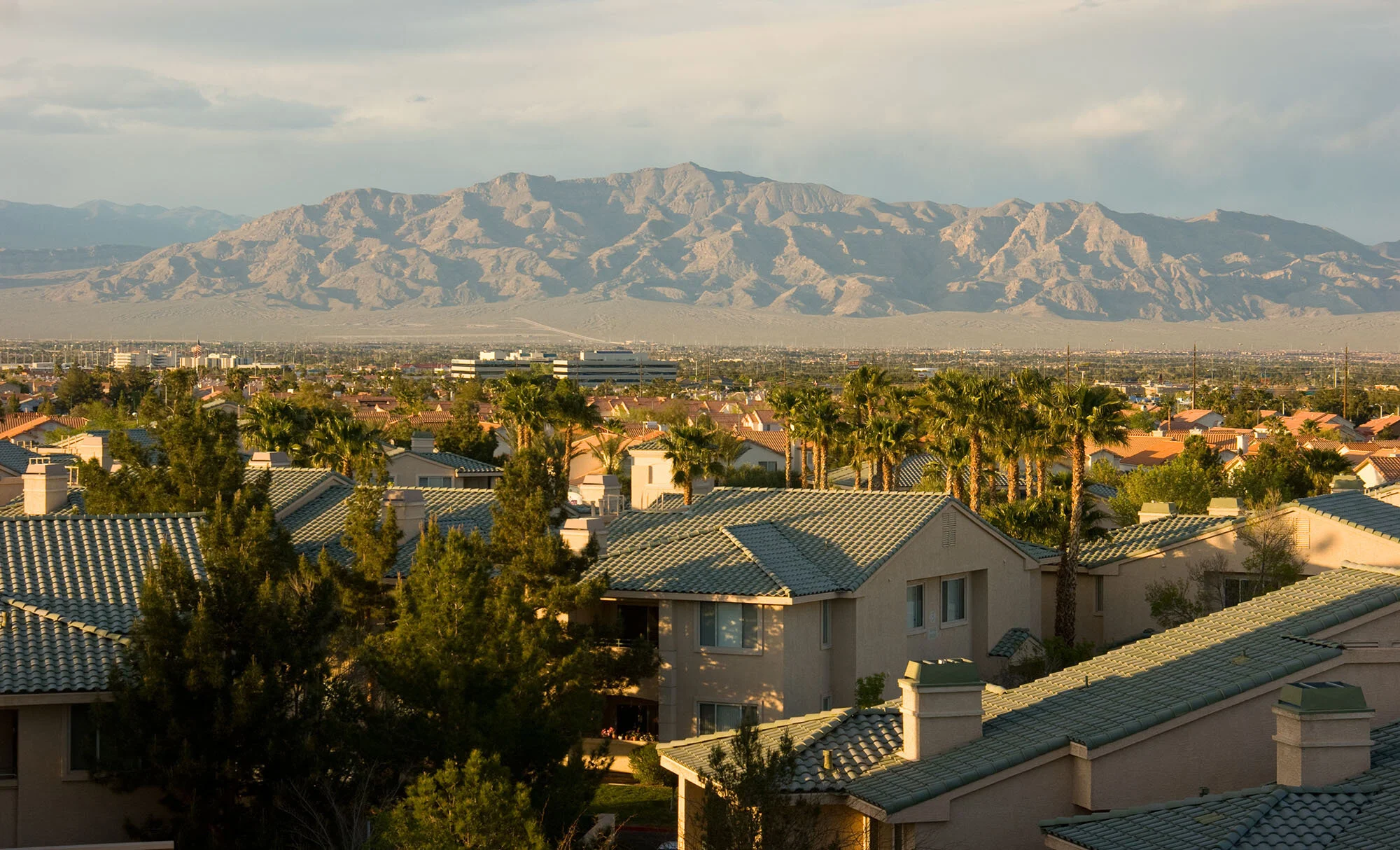
Apartment building insurance in Nevada is commercial coverage for five or more units. One number sets the tone: flood is excluded. NFIP building coverage on a commercial building caps at $500,000 plus $500,000 of contents (FEMA, accessed July 2026). That is often far less than a Las Vegas multifamily property is worth. The policy bundles commercial property on the structure, commercial general liability for tenants and guests, and loss of rents. Own a single rental house or a duplex? That is a different product — see our Las Vegas landlord and rental property insurance guide. This page is about the commercial form that takes over once your building crosses into multifamily.
Key takeaways
- Five units is the usual dividing line. One-to-four unit rentals are written on personal-lines landlord/dwelling policies; five or more units is habitational commercial business.
- Three coverages carry the policy: commercial property on the building, commercial general liability, and business income / loss of rents. That last one covers the revenue lost while the building is untenantable.
- Business income has a clock. The Insurance Information Institute notes a typical 48 to 72 hour waiting period. A standard property policy limits restoration to 30 days, extendable to 360 days by endorsement.
- Property limits are set per building, not per unit. The building limit reflects replacement cost of the whole structure; per-unit math is only a sanity check. Underinsuring can trigger a coinsurance penalty.
- Flood and earthquake are excluded from standard commercial property and bought separately. NFIP commercial building coverage caps at $500,000 (FEMA, accessed July 2026).
- Everything here is general and illustrative — not a quote, a bind of coverage, or a promise of any price. NPN #17531339.
Apartment building insurance and landlord insurance are not the same product. Buying the wrong one is the most expensive mistake a new multifamily owner makes. A landlord policy is a dwelling form built around a house. An apartment building policy is a commercial package built around a business that happens to be housing. That business has many tenants, common areas, a payroll, a rent roll, and a much larger liability surface. Commercial lines are not a niche corner of the market either. The Insurance Information Institute reports that commercial lines account for about half of U.S. property/casualty industry premium.
Below: what the policy covers, how it differs from the 1–4 unit landlord form, and how limits are actually structured. We also look at what Nevada habitational underwriters check, and which coverages apartment owners most often forget. Everything here is general — carrier underwriting and your policy language decide your actual coverage.
- Apartment building insurance in Nevada is commercial coverage for a property of roughly five or more units.
- The core is commercial property + general liability + business income (loss of rents). Ordinance or law and equipment breakdown are usually added.
- Property limits are written per building at replacement cost; liability is written per occurrence and in the aggregate.
- Flood and earthquake are excluded and bought separately; a commercial umbrella sits above the liability limit.
- An independent Nevada agency can shop habitational carriers for you. Terms vary by carrier and are never guaranteed; nothing here is a quote or binding offer.
Sources: Insurance Information Institute; FEMA/NFIP commercial coverage. General information, not a quote or binding offer; coverage and eligibility are set by each carrier.
Key terms in plain English
A handful of commercial insurance words carry this whole decision. Here is the simple version first.
- Habitational risk
- Underwriter shorthand for property where people live — apartments, student housing, senior housing. It is its own class with its own appetite.
- Business income / loss of rents
- Coverage for the rent you lose while a damaged building cannot be occupied. It applies during a defined period of restoration.
- Ordinance or law
- Pays the extra cost of rebuilding to today’s building code. That includes demolishing and replacing undamaged portions the code requires you to bring up to standard.
- Coinsurance
- A property-policy clause that reduces a claim payment. It applies if the building limit is set below a required percentage of replacement cost.
- Per occurrence vs. aggregate
- Per occurrence caps one claim. The aggregate caps everything the liability policy pays in a policy year.
What is apartment building insurance in Nevada?
Apartment building insurance in Nevada is commercial coverage for a multifamily property of roughly five or more units. It combines commercial property on the structure, commercial general liability, and business income for lost rent. It is written for the building as an operating business, not as a single dwelling. That is why the forms, the limits and the underwriting questions all change once you cross that unit threshold.
Smaller owners sometimes hear “businessowners policy” and assume it fits. Sometimes it does, but the Insurance Information Institute is clear that a BOP is aimed at “small and mid-sized businesses.” The III also says that “larger companies might purchase a commercial package policy or customize their policies to meet the special risks they face.” Think of a larger Las Vegas apartment complex with pools, gyms, gated parking and dozens of units. That is exactly the kind of risk that outgrows a packaged small-business form.
Want a wider view of the commercial coverage lines Nevada business owners carry — property, liability, business income, workers’ comp? Start with our Las Vegas small business insurance checklist. This page is the habitational specialty that sits inside that world.
What does an apartment building policy actually cover?
An apartment building policy covers three things first. Those are the building, your liability to the people in it, and the rent lost when it cannot be occupied. Endorsements then cover the risks that habitational property attracts. Most Nevada multifamily programs are built from these parts:
- Commercial property. The structure, permanently installed fixtures, and often landlord-owned appliances and common-area contents. The III’s small-business property guidance puts the valuation choice plainly. You can insure buildings at “actual cash value” — what they are worth. Or you can insure them at “replacement cost” — what it would cost to replace them with new construction. Habitational owners almost always want replacement cost.
- Commercial general liability. Bodily injury and property damage claims from tenants, guests and vendors. Think the stair fall, the pool incident, or the dog bite in a common area.
- Business income / loss of rents. The rent roll that stops when units are uninhabitable after a covered loss.
- Ordinance or law. The gap between rebuilding what burned and rebuilding what current code now requires. It is a real exposure on older Las Vegas garden-style properties.
- Equipment breakdown. Boilers, chillers, elevators, rooftop HVAC. In a Nevada summer, an air-conditioning failure is a habitability problem, not just a repair bill.
- Hired and non-owned auto, plus workers’ comp if you have on-site staff.
Where liability fits
Liability is the coverage owners most often underestimate. Want the plain-English version before you shop limits? Our liability coverage explained guide walks through per-occurrence and aggregate limits without the jargon.
Valley West takeThe two endorsements Nevada apartment owners skip and later regret are ordinance or law and equipment breakdown. An older building rebuilt to current code costs far more than the fire damage alone. A failed chiller in July empties units fast. Ask what each costs before you decline it. This is general information, not a quote.
How is apartment building insurance different from landlord insurance?
Own 1–4 units instead? A landlord/dwelling policy is the right product. See the Clark County landlord and rental property insurance guide for how those policies are built.
Apartment building insurance differs from landlord insurance in form, rating basis and liability structure. Landlord policies are personal-lines dwelling coverage for one-to-four units, while apartment policies are commercial coverage for five or more. The practical differences line up like this:
There is a third form worth knowing about at the small end of the market. A commercial package written for shops, offices and small mixed use buildings is a different product again, and the Las Vegas BOP explainer covers where that package fits and why an apartment building normally sits outside it.
| Feature | Landlord policy (1–4 units) | Apartment building policy (5+ units) |
|---|---|---|
| Line of business | Personal lines (dwelling form) | Commercial lines (package or monoline) |
| Property limit basis | Per dwelling | Per building, at replacement cost |
| Liability | Personal liability, per occurrence | Commercial general liability, per occurrence + aggregate |
| Lost rent | Fair rental value | Business income / loss of rents, with a period of restoration |
| Common-area exposure | Minimal | Central — pools, gyms, stairs, parking, lighting |
| Typical add-ons | Water backup, vandalism | Ordinance or law, equipment breakdown, umbrella, crime |
| Staff / payroll exposure | Rare | Common — drives workers’ comp and hired/non-owned auto |
| Flood & earthquake | Excluded — buy separately | Excluded — buy separately, often with excess layers |
What the table means in practice
Read down the table and one theme repeats. Every difference comes from scale and from the fact that people live there full time. That is also why owners who buy a building while still thinking like a single-property landlord tend to be underinsured. The gap shows up on liability and on lost rent, not on the building itself.
What the commercial form adds
- Rates the whole building on replacement cost, not a single dwelling.
- Commercial general liability for tenants and guests, written per occurrence and in the aggregate.
- Treats lost rent as business income, with a defined restoration period.
- Room for ordinance or law, equipment breakdown, and a commercial umbrella.
Where owners get caught
- Setting the building limit low and triggering a coinsurance penalty at claim time.
- Assuming flood and earthquake are included — both are excluded and added separately.
- Leaning on the standard 30-day restoration period on a building that cannot be rebuilt that fast.
- Reasoning in per-unit terms when the policy pays against the building limit.
Should apartment building limits be set per unit or per building?
Apartment building insurance sets property limits per building at replacement cost. Liability limits are written per occurrence and in the annual aggregate. Per-unit math is only a sanity check, never the policy structure. Owners like per-unit reasoning because it is easy to compare across a portfolio. Divide the building limit by the unit count, and see whether the number looks plausible for construction in your submarket.
The risk of thinking only in per-unit terms is coinsurance. If the building limit sits below the percentage of replacement cost the policy requires, a partial claim can shrink proportionally. The penalty lands at the worst possible moment. Use the estimator below to see how a per-building limit and a per-unit sanity check relate. It is a directional illustration only. It does not access any carrier’s rating, is not an appraisal or a replacement-cost valuation, and is not a quote.
Illustration only. This tool multiplies your own inputs to show a per-building property limit and 12 months of gross rent. It does not value your building, and does not access any carrier’s rating or underwriting. It does not reflect coinsurance requirements, ordinance-or-law exposure, or your actual period of restoration, and cannot determine eligibility or price. Replacement cost should come from a professional valuation. Coverage and terms vary by carrier and are never guaranteed; nothing here is a quote or binding offer. NPN #17531339.
Whatever the estimator shows, the final building limit should come from a professional replacement-cost valuation, not a rule of thumb. If the terminology is getting thick, our insurance glossary defines coinsurance, aggregate and period of restoration in one place.
What does loss of rents or business income coverage pay for?
Loss of rents coverage is written as business income on a commercial policy. It replaces the rental revenue an apartment building would have earned while it is untenantable after a covered loss. It pays for a defined period of restoration. The Insurance Information Institute describes the mechanic directly:
The policy covers actual loss of net business income that would have been earned had it not been necessary to suspend operations due to a covered cause of loss. Insurance Information Institute, Small Business Property Insurance — https://www.iii.org/publications/insuring-your-business-small-business-owners-guide-to-insurance/specific-coverages/property-insurance
The III adds that the policy “also covers continuing normal operating expenses such as utility payments and payroll.” That matters for an apartment building: the taxes, debt service and on-site staff do not pause when the units empty.
Two timing details decide whether the coverage does its job. The III notes a typical 48 to 72 hour waiting period before the period of restoration begins. It also notes that “the standard property policy limits the business income restoration period to 30 days, but this period can be extended to 360 days by endorsement.” Thirty days does not rebuild a fire-damaged wing. Extended-period-of-indemnity language is where owners should spend their attention.
Business income is also excluded for flood and earthquake unless those perils are separately insured. The exclusion follows the property coverage.
What do underwriters look at on a Las Vegas apartment building?
Nevada habitational insurance underwriters look hardest at building age and updates, and at the amenities that create injury exposure. Protection features, loss history and management quality round out the list. A Las Vegas submission turns on roof age and type, electrical and plumbing updates, unit count and number of stories. Underwriters also weigh pools and gyms, stairways and balconies, exterior lighting and security. Sprinkler and alarm systems, prior claims, and tenant screening matter too.
Nevada law sits underneath all of it. The habitability duty is written directly into the landlord-tenant chapter:
The landlord shall at all times during the tenancy maintain the dwelling unit in a habitable condition. Nevada Revised Statutes, NRS 118A.290 — https://www.leg.state.nv.us/NRS/NRS-118A.html
That duty is a legal obligation, not an insurance term. But deferred maintenance is exactly what produces both the habitability complaint and the water-damage claim, and underwriters price accordingly. Nevada carriers and producers are regulated by the Nevada Division of Insurance. Coverage terms are governed by the policy your carrier issues.
The scale of the commercial market is worth keeping in perspective too. III figures compiled from NAIC data via S&P Global Market Intelligence show commercial insurance incurred losses rising. In 2020 they were roughly $171.3 billion; by 2024 they were about $233.8 billion. That is a hardening backdrop habitational owners have felt directly.
Does an apartment building need flood, earthquake or umbrella coverage?
Nevada apartment building insurance routinely needs all three. Standard commercial property excludes flood and earthquake, and habitational liability claims can exceed a primary general liability limit. Each is bought as its own layer:
- Flood. Excluded from commercial property. Through the National Flood Insurance Program, coverage for a commercial building runs up to $500,000. Another $500,000 is available for commercial contents — a ceiling most Nevada apartment properties exceed. That is why excess flood layers exist. Our Las Vegas flood insurance guide covers how Clark County flood zones work.
- Earthquake. Also excluded, also separate. Nevada is one of the more seismically active states in the country; see our Nevada earthquake insurance guide.
- Commercial umbrella. Sits above the general liability limit for the claim that blows through it. Our umbrella insurance guide explains how excess limits attach.
Renters coverage and financing
One more gap worth closing on day one: your policy covers the building, not your tenants’ belongings. Requiring renters coverage in the lease protects them and reduces friction after a loss. Our Las Vegas renters insurance guide is a useful link to hand new tenants. Buying or refinancing the building itself? The financing side of the Valley West family, Valley West Mortgage, works the property-financing half of the same transaction.
Own or manage a Nevada apartment building?
Tell us the unit count, year built, and what amenities are on site. An independent Nevada agency will help you compare habitational commercial property, general liability, loss of rents, and umbrella options across carriers. No pressure, no obligation. Coverage is subject to carrier underwriting, eligibility and policy terms; availability and terms vary by carrier and are never guaranteed. Valley West Insurance is an agency, not an insurer, and does not bind coverage. NPN #17531339.
Request an apartment building quoteThe bottom line
Apartment building insurance in Nevada is a commercial product, and the switch happens around five units. Below that line, a landlord/dwelling policy is usually right. At or above it, you are insuring an operating business.
The core is commercial property on the building at replacement cost, plus commercial general liability with per-occurrence and aggregate limits. Business income then replaces the rent roll while the property is untenantable. Ordinance or law, equipment breakdown, flood, earthquake and a commercial umbrella are layered on as the building demands.
Set the property limit from a real replacement-cost valuation rather than a per-unit rule of thumb. Pay close attention to the period of restoration, because 30 days rarely rebuilds a multifamily structure. This is general information, not a quote or binding offer. Eligibility, coverage and terms are set by the carrier and are never guaranteed.
Live reviewsWe link directly to the public Google review profile so Nevada apartment owners can check the current rating, review volume, and recent feedback at the source instead of relying on fixed counts on this page. Read current Google reviews.
Request a quote without leaving this page
Tell us what you want to cover. A licensed agent will contact you by email to discuss your coverage options with carriers we work with. No pressure, no obligation.
Prefer to talk? Call (702) 262-9900. Do not use this form to report a claim. Submitting this form does not bind or change coverage. Coverage is subject to carrier underwriting and policy terms. Valley West Insurance is a Nevada-licensed insurance agency, not an insurer. Nevada agency license #1021906.
Frequently asked questions
What is apartment building insurance in Nevada?
Apartment building insurance in Nevada is commercial coverage for a multifamily property, generally five or more units, that combines commercial property coverage on the building, general liability for injuries to tenants and guests, and business income or loss of rents coverage for the rental revenue you lose while a damaged building is repaired. Owners commonly add ordinance or law, equipment breakdown, and a commercial umbrella. Coverage, eligibility and terms are set by each carrier and are never guaranteed; this is general information, not a quote or binding offer.
How is apartment building insurance different from landlord insurance?
Landlord insurance is a personal-lines dwelling policy built for a one-to-four unit rental house, condo or duplex. Apartment building insurance is a commercial policy built for a five-or-more unit habitational property, so it is rated on the whole building rather than a single dwelling, carries commercial general liability instead of personal liability, and treats lost rent as business income. If you own a single Las Vegas rental house or a duplex, a landlord policy is usually the right product; the commercial form takes over once the building crosses into multifamily. This is general information, not a quote.
What does loss of rents or business income coverage pay for?
Loss of rents, written as business income coverage on a commercial policy, replaces the rental revenue an apartment building would have earned while it is untenantable after a covered loss. The Insurance Information Institute describes business income as covering the actual loss of net business income that would have been earned had it not been necessary to suspend operations due to a covered cause of loss, plus continuing normal operating expenses such as utility payments and payroll. The III also notes a typical 48 to 72 hour waiting period, and that a standard property policy limits the restoration period to 30 days, extendable to 360 days by endorsement.
Terms vary by carrier and policy; this is not a quote.
Should apartment building limits be set per unit or per building?
Apartment building property limits are set per building, based on the replacement cost of the whole structure, while liability limits are usually written per occurrence and in the aggregate for the entire location or schedule. Owners often reason in per-unit terms because it is an easy sanity check - total building limit divided by unit count - but the policy itself pays against the building limit. Underinsuring the building can trigger a coinsurance penalty at claim time. A licensed agent and a replacement-cost estimate should set the number; nothing here is a quote or an appraisal.
Does an apartment building need flood, earthquake or umbrella coverage?
Flood and earthquake are excluded by standard commercial property policies and have to be added separately, and habitational owners frequently add a commercial umbrella above the general liability limit. Through the National Flood Insurance Program, building coverage for a commercial building is capped at $500,000 with another $500,000 available for commercial contents, so larger Nevada apartment properties often need excess flood above the NFIP limit. Availability, eligibility and terms vary by carrier and are never guaranteed; this is general information, not a quote.
What do underwriters look at on a Las Vegas apartment building?
Habitational underwriters look at the age of the building, roof age and type, electrical and plumbing updates, the number of units and stories, pools, gyms, stairs and balconies, security and lighting, sprinkler and alarm protection, prior loss history, and how the property is managed and screened. Nevada landlord-tenant law also matters: under NRS 118A.290 the landlord shall at all times during the tenancy maintain the dwelling unit in a habitable condition, and deferred maintenance shows up in both claims and underwriting. Eligibility is decided by each carrier and is never guaranteed; this is not a quote or binding offer.
Methodology: this guide describes how commercial apartment building (habitational) insurance is structured in Nevada. It uses Insurance Information Institute definitions of commercial property valuation (actual cash value vs. replacement cost) and business income coverage. The guide also leans on the III’s business-interruption timing (48 to 72 hour waiting period; 30-day standard restoration period extendable to 360 days by endorsement). It draws on the III’s businessowners-policy scope and its note that larger companies may need a commercial package policy. Commercial-lines figures come from III/NAIC data compiled via S&P Global Market Intelligence. It cites National Flood Insurance Program commercial coverage limits of $500,000 building and $500,000 contents from FEMA’s NFIP agent resources.
Finally, it cites Nevada’s landlord habitability duty under NRS 118A.290.
The five-unit line between personal-lines landlord/dwelling coverage and commercial habitational coverage reflects general market practice, not a statutory threshold. Each carrier sets its own eligibility. No premium, price or savings figure is stated anywhere on this page. Coverage, eligibility and terms are set by each carrier’s underwriting and your policy documents. They vary by property and are never guaranteed. Nothing here is a quote or binding offer. Confirm coverage with a licensed agent and your policy documents. Updated July 22, 2026.
Sources
- Insurance Information Institute — Small Business Property Insurance — actual cash value vs. replacement cost valuation, and business income covering actual loss of net business income plus continuing normal operating expenses. Accessed July 2026.
- Insurance Information Institute — Do I need business interruption insurance? — 48 to 72 hour waiting period; standard 30-day business income restoration period extendable to 360 days by endorsement; flood and earthquake require separate policies. Accessed July 2026.
- Insurance Information Institute — What does a businessowners policy (BOP) cover? — BOP components, exclusions, and the note that larger companies might purchase a commercial package policy. Accessed July 2026.
- Insurance Information Institute — Facts + Statistics: Commercial lines — commercial lines account for about half of U.S. property/casualty premium; incurred losses of $171,271,047 thousand (2020) and $233,803,640 thousand (2024), NAIC data via S&P Global Market Intelligence. Accessed July 2026.
- FEMA / National Flood Insurance Program — The Ins and Outs of NFIP Commercial Coverage — up to $500,000 of coverage each for commercial buildings and commercial personal property. Accessed July 2026.
- Nevada Revised Statutes — NRS 118A.290 (Habitability of dwelling unit) — the landlord shall at all times during the tenancy maintain the dwelling unit in a habitable condition.
- Nevada Division of Insurance (doi.nv.gov) — Nevada insurer and producer regulation and consumer guidance.
Related Nevada property insurance guides
Las Vegas small business insurance checklist
The commercial coverage lines Nevada business owners carry — property, liability, business income and more.
Read the guide 1–4 unitsLandlord & rental property insurance
The dwelling-form policy for a single Las Vegas rental house, condo or duplex.
Read the guide County detailClark County landlord insurance
How landlord policies are built and priced for Clark County rental property.
See the guide Excess limitsUmbrella insurance in Las Vegas
How excess liability attaches above a primary limit — and when owners need it.
Read the guide Separate perilFlood insurance in Las Vegas
Why flood is excluded from property policies, and how NFIP limits work.
Open the guide For tenantsRenters insurance in Las Vegas
The coverage to require in the lease — your policy does not cover tenant belongings.
Read the guide Get startedRequest an apartment building quote
Compare habitational commercial options with a local independent Nevada agency — no obligation.
Start now